

The Art of Combining Hard and Soft Surfaces for a Balanced Home
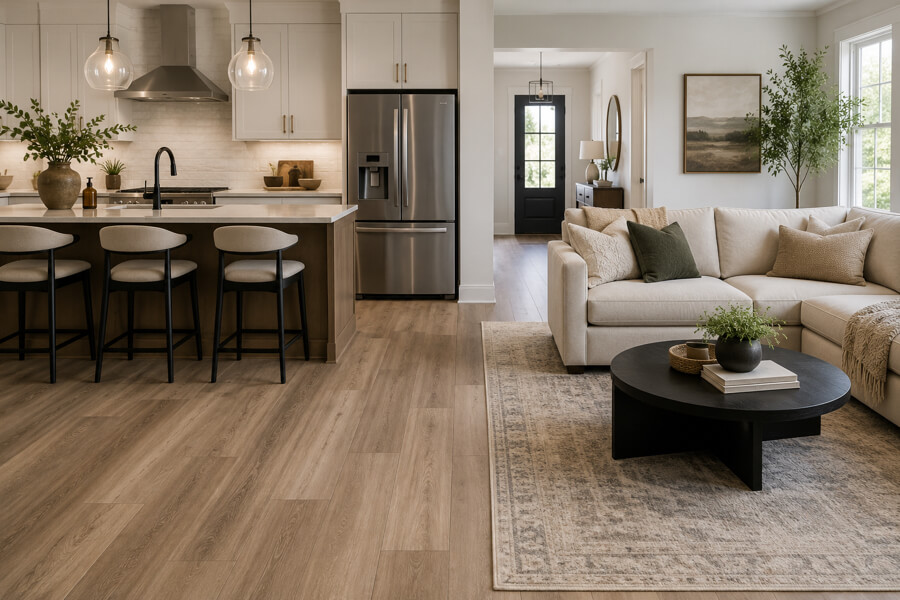
Choosing new flooring often feels like a debate between two distinct worlds. On one side, you have the sleek lines of hardwood, luxury vinyl or tile. On the other, you have the luxury and cushioning underfoot that only carpet can provide. It is easy to think you must choose a single lane for your entire layout, but the most inviting homes rarely rely on just one texture. Designing a living space that feels both cohesive and functional is all about striking the right balance between hard and soft surfaces.
When you blend these textures, you create a natural rhythm that guides people through your home. Hard surfaces offer structure and an open, airy feeling that helps smaller footprints look expansive. Soft surfaces introduce warmth, soften acoustics and create dedicated zones for relaxation. Bringing these elements together requires a look at how rooms connect, how light interacts with different materials and how your family uses each square foot. By planning your flooring transitions and material pairings with care, you can establish a visual flow while ensuring every room performs exactly how you need it to.
Designing Visual Transitions Across Shared Spaces
The primary challenge when mixing different flooring types is making the transition look intentional rather than accidental. In modern, open-concept layouts, floors serve as visual maps that define where one room ends and another begins. An abrupt shift from a dark, hand-scraped hardwood to a thick, pale shag carpet can break the visual plane and make your layout feel fragmented. To prevent this disjointed effect, look for common design threads that tie your spaces together. This does not mean your choices must match perfectly, but they should share a common undertone or stylistic language. When the underlying colors speak to one another, the physical boundary between a hard surface and a soft one becomes a natural progression rather than an interruption.
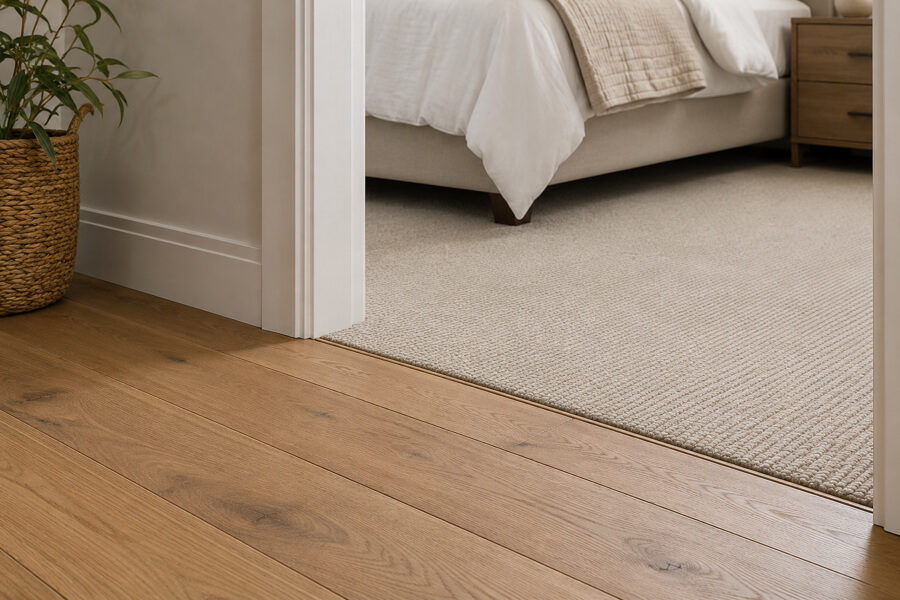
Every flooring material has a base undertone that dictates how it reacts to light and surrounding decor. Hardwoods and luxury vinyl planks range from fiery red-browns to sandy gold and cool, stormy grays. Carpets carry similar variations, from deep charcoal and cool taupe to warm cream and beige. If you choose a white oak plank with a subtle, golden-sandy undertone for your main hallway, pairing it with an oatmeal-toned patterned carpet in the adjacent bedroom creates a smooth visual bridge. The texture changes, but the warmth remains constant. Conversely, if your main living areas feature a contemporary, cool gray tile, selecting a soft carpet with icy silver or slate undertones keeps the overall aesthetic feeling grounded and unified.
The way you lay your hard planks also plays a significant role in how your eye meets an adjoining soft surface. Running your hardwood or luxury vinyl planks parallel to the threshold of a carpeted room can create a distinct visual barrier, acting almost like a stop sign for the eye. When you install planks so they run perpendicular to the transition line, they act as visual arrows that draw the eye naturally into the next space. This technique stretches the sightlines of your home, making hallways feel longer and drawing a clear line of sight directly toward the inviting softness of your bedrooms or living rooms.
Selecting the Right Pairs for Performance and Style
Beyond the visual connection, the specific materials you choose need to complement each other in weight, height and overall design personality. A very thick, heavy hard surface looks best when paired with a soft surface that can hold its own visually. The goal is to create a sense of equilibrium where neither material overpowers the other. This involves looking closely at the pile of your carpet and the grain or pattern of your hard flooring to ensure they work as a team to elevate your interior design.
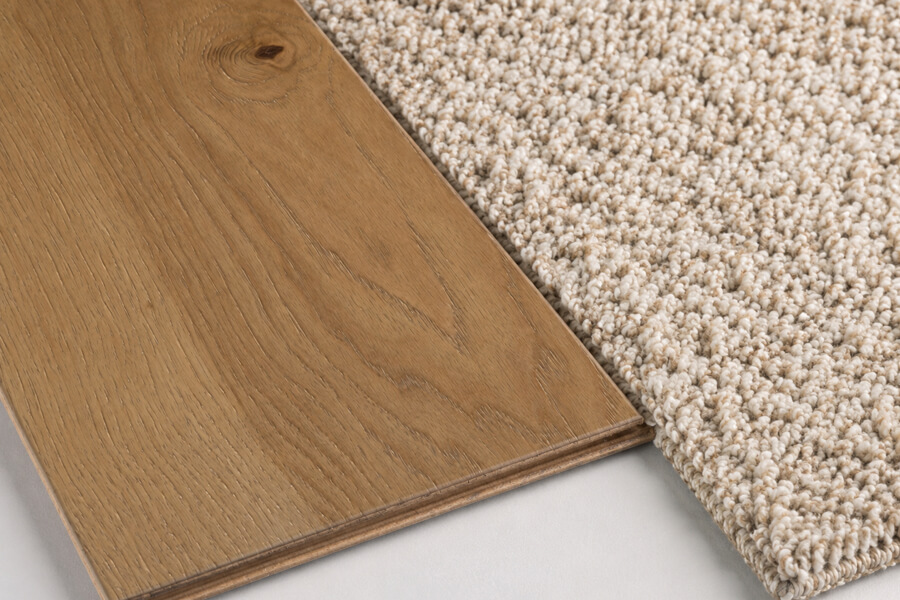
Hardwoods with heavy grain patterning, such as hickory or oak, carry a lot of visual texture on their own. If you place a highly detailed, multicolored berber carpet right next to a busy wood grain, the two surfaces end up competing for attention, which can make the room feel cluttered. For floors with prominent graining, a tight, low-pile carpet in a solid, neutral hue provides a clean place for the eye to rest. The simplicity of the carpet allows the natural variation of the wood to stand out, while the sleek surface of the wood highlights the plush, uniform comfort of the carpet.
If your home features smooth, minimalist surfaces like large-format porcelain tile or polished concrete, the space can sometimes run the risk of feeling a bit sterile or cold. These sleek hard floors provide the perfect canvas for a bit of playfulness in your soft surfaces. Introducing a carpet with a subtle geometric pattern, a woven linear texture, or a rich cut-and-loop pile adds immediate depth to a modern space. The structured lines of the tile frame the patterned carpet, transforming bedrooms or home offices into tailored spaces that still feel cozy.
Managing the Practical Elements of Mixed Flooring
A successful flooring plan considers the physics of the installation just as much as the color palette. One of the most common issues in homes with mixed surfaces is an uneven boundary line where two materials meet. If a thick carpet sits higher than an adjacent luxury vinyl plank, it creates a subtle trip hazard and wears down unevenly at the edge. Addressing these physical transitions during the planning phase ensures your floors remain safe and durable for years to come.
Different materials naturally have varying thicknesses. A solid hardwood tongue-and-groove plank sits much higher than a thin piece of resilient luxury vinyl, while carpets vary wildly depending on the padding underneath. Professional installers utilize specific subfloor prep techniques and specialized transition strips to ensure the finished surfaces sit perfectly flush. Using schluter strips, low-profile T-moldings or specialized carpet reducers creates a smooth, safe incline that protects the raw edges of both materials from fraying or chipping over time.
Sometimes, the best way to introduce a soft element into a room is by layering area rugs directly over your hard flooring. This approach gives you the durability and easy cleanup of hard surfaces alongside the acoustic benefits and comfort of a soft textile. When placing a rug over hardwood or tile, scale is everything. A rug that is too small looks like an afterthought, floating like an island in the middle of the room. Choosing a larger rug that allows the front legs of all your furniture to rest comfortably on top anchors the seating arrangement and lets a border of your hard flooring frame the perimeter of the room.
Creating a Cohesive Home Layout
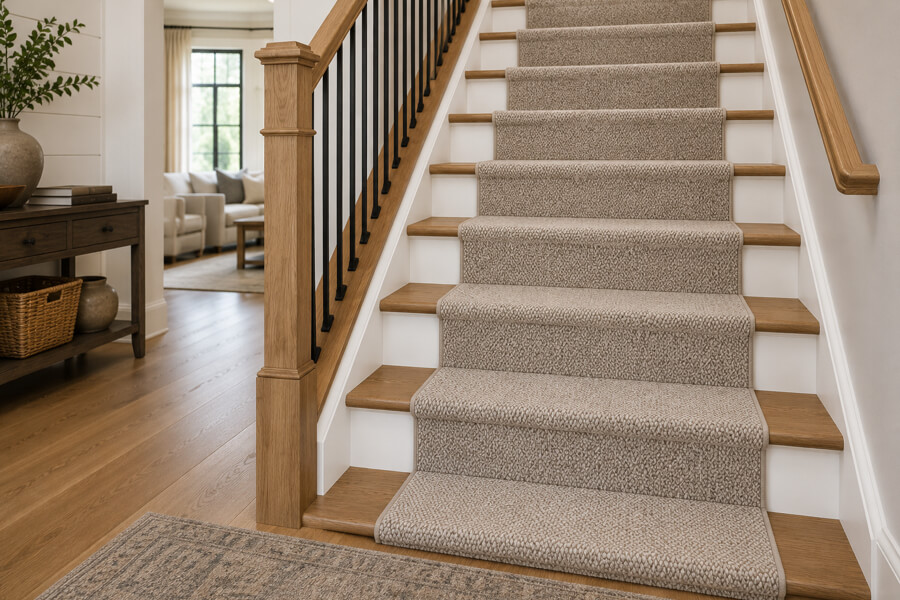
Achieving a balanced home is entirely about understanding the unique strengths of every material and letting them work together. By matching undertones, thinking about plank direction and planning for clean, flush transitions, you can confidently mix hard and soft surfaces to create a space that feels incredibly thoughtful, comfortable and tailored to your lifestyle.
At Carpetland USA Granite & Flooring, we’ll help you explore your options and find the right flooring for your home in Dothan, AL.